

Market Insights
7 min read
Jul 12, 2025
Do Rolex Watches Hold Their Value in South Africa?
Do Rolex Watches Hold Their Value in South Africa?
Last Updated: December 2025 | Reading Time: 7 minutes
Summary
Rolex watches are often called "investments," but do they actually hold value in the South African market? The answer: it depends on the model. While certain Rolexes (Daytona, Submariner, GMT-Master II) have appreciated significantly and often sell above retail, others (two-tone Datejust, Air-King) depreciate 20-40% after purchase. This guide breaks down which models hold value best, South African market trends, factors affecting appreciation, and whether buying a Rolex as an investment makes sense in 2025.
"A Rolex never loses value."
I hear this at least once a week. Usually from someone trying to justify spending R180,000 on a watch. Or from a seller shocked that their 10-year-old Datejust isn't worth what they paid.
Here's the truth that the industry doesn't want you to know:
Most Rolexes depreciate the moment you buy them. Not all. But most.
The ones that appreciate? They're specific models, in specific conditions, bought at specific times. And even then, "appreciation" often means you break even after inflation.
After 73 years of tracking Rolex values in the South African market, I've learned this: whether a Rolex holds its value depends far more on which model you buy than the fact that it's a Rolex.
The Models That Actually Appreciate (And Why)
Not all Rolexes are created equal. Some hold value brilliantly. Others? Not so much.
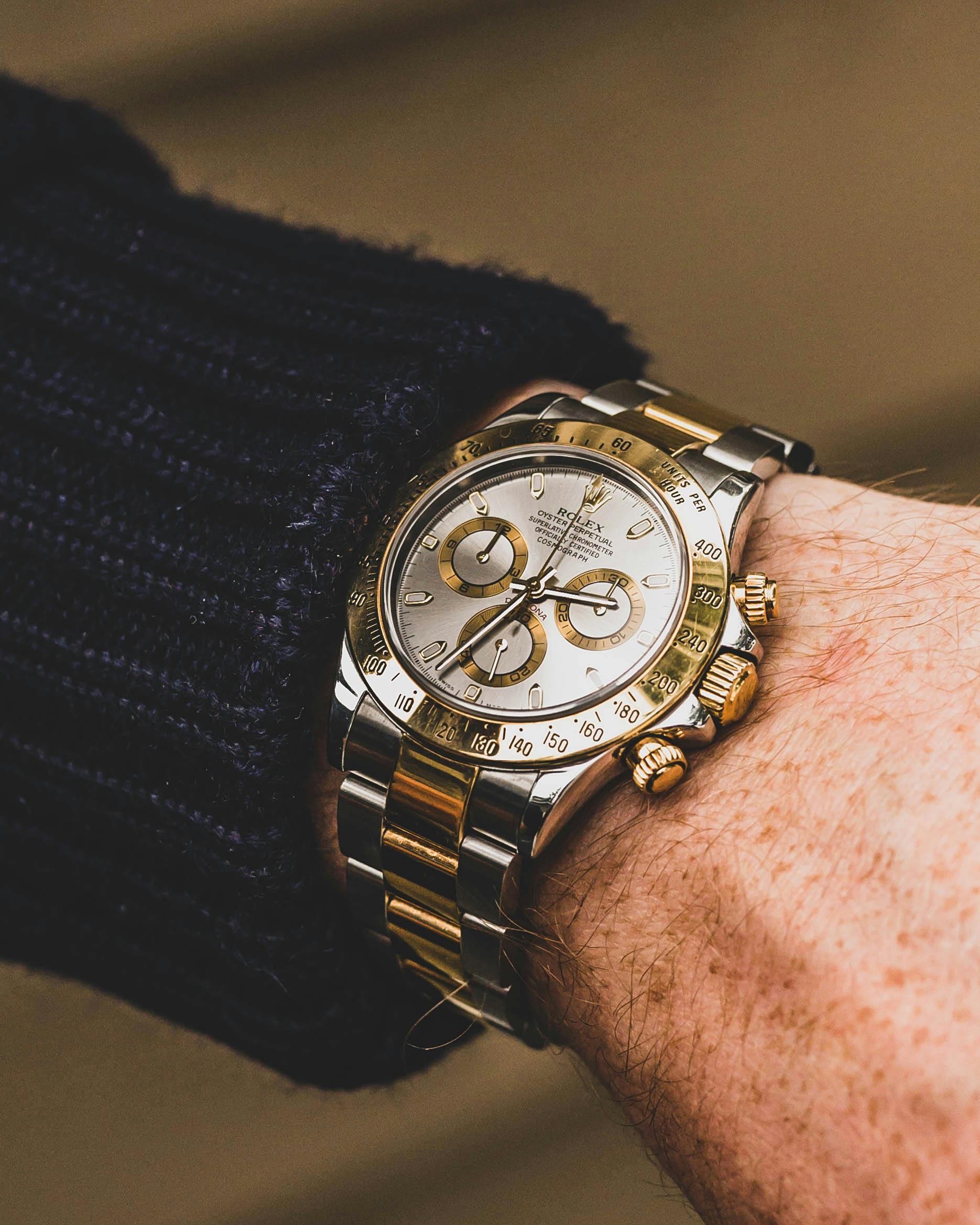
Rolex Daytona
Market performance: Up 120-250% over past decade (depending on reference)
Why it holds value:
Chronic supply shortage (2-5 year waitlists at authorized dealers)
Celebrity cachet (Paul Newman, racing heritage)
Steel models especially scarce
Current South African pricing:
Rolex Daytona Ref. 116500LN (white dial, steel): Retails R250,000, resells R320,000-R380,000
Vintage Paul Newman models: R1.2 million to R8 million+
The catch: You can't just walk into a Rolex boutique and buy one. Most people on waitlists wait 3-7 years.
Rolex Submariner
Market performance: Up 40-80% over past decade
Why it holds value:
Iconic design unchanged since 1953
High demand from collectors and casual buyers
"Hulk" green dial and "Kermit" models especially strong
Current South African pricing:
Modern Submariner Ref. 126610: Retails R190,000, resells R175,000-R195,000 (depending on condition/year)
Vintage Submariner (1960s-1980s): R85,000 to R450,000+ (condition-dependent)
Why it's reliable: The Submariner has consistent demand. Even if you don't make money, you're unlikely to lose much.
Rolex GMT-Master II
Market performance: Up 50-100% (specific bezels)
Why certain versions hold value:
"Pepsi" bezel (red/blue): High demand, limited supply
"Batman" bezel (black/blue): Strong collector appeal
"Root Beer" (brown/gold): Niche but growing
Current South African pricing:
GMT-Master II "Pepsi" Ref. 126710BLRO: Retails R210,000, resells R240,000-R290,000
The nuance: Not all GMT-Master IIs appreciate equally. Bezels matter.
The Models That Depreciate (And How Much)
Now here's what Rolex salespeople don't tell you:
Rolex Datejust (Two-Tone)
Market performance: Down 20-35% after purchase
Why it depreciates:
High retail markup that doesn't reflect demand
Two-tone (steel/gold) less desirable than full steel or full gold
Abundant supply in secondary market
Example:
You buy a two-tone Datejust for R150,000 new. Five years later, it's worth R95,000-R110,000 on the secondary market.
Exception: Vintage Datejusts (1960s-1980s) with rare dials sometimes hold value, but that's collector-driven, not standard.
Rolex Oyster Perpetual Date (34mm, Older References)
Market performance: Down 25-40% after purchase
Why it depreciates:
Smaller case size (34mm) out of favor in current market
Less iconic than Submariner or GMT
Plentiful supply
Current secondary market: R25,000-R55,000 (depending on age and condition)
Rolex Air-King (Pre-2016)
Market performance: Down 30-45% after purchase
Why it depreciates:
Less iconic design
Smaller collector base
Overshadowed by sportier models
South African Market Trends (What's Different Here)
Rolex values in South Africa don't always mirror global trends. Here's why:
1. Import costs and taxes affect pricing
South African Rolex prices are 10-15% higher than U.S. or European prices due to import duties and VAT. This means:
Buying new here costs more
Resale values reflect local market, not global
Arbitrage opportunities exist (buying overseas, selling here)
2. Demand lags global trends by 6-12 months
When a model gets hot in the U.S., we see the same demand spike in South Africa 6-12 months later. This creates opportunities for early sellers.
3. Currency fluctuations affect value
Rolex is priced in USD/EUR globally. When the Rand weakens, Rolex prices in South Africa rise—but resale values lag. This can create brief windows where selling is advantageous.
What Actually Affects Rolex Value Retention
It's not just about the model. These factors determine whether your Rolex holds value:
1. Condition
A well-kept Submariner retains 85-90% of value. A heavily worn one? 60-70%. The R30,000 difference between "excellent" and "good" condition is real.
2. Documentation
Box and papers add 10-30% to resale value. Without them, expect lower offers across the board.
3. Service history
A recently serviced watch (within 2-3 years) with documentation holds value better than one with unknown service history.
4. Market timing
Rolex values fluctuate. Selling during high demand yields better returns. Selling during a market dip means accepting lower offers.
5. Originality
Unpolished cases, original dials, and original bracelets hold value better than modified or restored pieces.
The Investment Question: Should You Buy a Rolex to Make Money?
Let's be direct: buying a Rolex as a pure investment is generally a bad idea.
Here's why:
1. You're competing with professional dealers
They have access to inventory, better pricing, and market intelligence you don't. By the time you hear about a "hot" model, they've already bought it.
2. Liquidity is limited
Stocks or property can be sold quickly. A Rolex? You need the right buyer at the right time. That can take months.
3. Transaction costs eat returns
Dealer purchase: You lose 25-40% immediately (dealer margin)
Private sale: Time, effort, risk, and no guarantees
Auction: 15-25% in fees
4. Appreciation is unpredictable
The Daytona appreciated 200%+ over the past decade. Will it do the same over the next? Maybe. Maybe not. Past performance doesn't guarantee future returns.
The exception:
If you're buying a Rolex you genuinely want to wear, and it happens to hold value well, that's a bonus. But don't buy it solely hoping to flip it for profit.
What Most People Get Wrong About Rolex as an "Investment"
Here's the mistake I see constantly:
People compare Rolex appreciation to stocks or property—and it's a false comparison.
Rolex is a luxury good, not an asset class.
Yes, some models appreciate. But you're not earning dividends. You're not generating rental income. You're hoping demand outpaces supply long enough for you to sell at a profit.
Meanwhile, your watch is:
Sitting in a safe (not being enjoyed)
Requiring insurance
Needing periodic servicing (R8,000-R15,000 every 5-10 years)
Subject to market whims you can't control
Better approach:
Buy a Rolex you love. Wear it. Enjoy it. And if it holds value when you're ready to sell, consider that a win. But don't sacrifice wearing a watch you love just to preserve "investment value."
The Models to Buy If Value Retention Matters
If you want a Rolex that's most likely to hold value in the South African market:
Safest bets (minimal depreciation, possible appreciation):
Rolex Submariner (any reference, steel preferred)
Rolex GMT-Master II (Pepsi or Batman bezel)
Rolex Explorer (vintage or modern)
High-risk, high-reward (if you can get them at retail):
Rolex Daytona (steel, any dial)
Limited editions or discontinued models with collector appeal
Avoid for value retention:
Two-tone Datejust
Smaller case sizes (34mm and under)
Heavily modified or refinished pieces
What to Do Right Now
You've just learned which Rolexes hold value, which don't, and why the "Rolex as investment" narrative is more complicated than most people realize.
If you're considering buying a Rolex:
Choose a model you'll actually wear and enjoy. If it holds value, that's a bonus—not the goal.
If you're selling a Rolex:
Understand that unless you own a Daytona, Submariner, or GMT-Master II, you're likely selling for less than you paid. Adjust expectations accordingly.
If you're curious about your Rolex's current value:
Get a professional valuation. Market conditions change, and what your watch was worth 2 years ago may not reflect today's value.
Want to Know What Your Rolex Is Worth Today?
We've been tracking Rolex values in the South African market since 1951. Whether you're buying, selling, or simply curious, we provide transparent valuations backed by real market data.
Get your free valuation in 24 hours:
Or reach out directly:
WhatsApp: 078 603 8717
Email: jhbjewelersandwatchmakers@gmail.com
Key Takeaways
Some Rolexes appreciate (Daytona, Submariner, GMT-Master II), but most depreciate 20-40% after purchase—model selection matters more than the Rolex name alone.
South African market trends lag global trends by 6-12 months—creates opportunities for informed sellers.
Condition, documentation, and originality significantly affect value retention—a well-kept watch with papers holds far more value.
Buying Rolex solely as an investment is generally unwise—liquidity is limited, transaction costs are high, and appreciation is unpredictable.
If value retention matters, stick to steel sports models—Submariner, GMT-Master II, and Explorer are safest bets.
The best approach: buy what you love, wear it, and consider value retention a bonus—not the primary goal.
About the Author
This guide was written by the team at JHB Jewellers & Watchmakers, South Africa's most trusted buyers of Swiss-made luxury watches since 1951. We've tracked Rolex values through decades of market fluctuations and believe every buyer and seller deserves honest, data-backed insights—not marketing hype.

Ready to Get Your Free Valuation Today?
No obligation. No pressure. Just a fair offer backed by 7+ decades of trusted service.